
The Body is a prolific musical force whose creativity is matched only by the astonishing weight of their sound. Duo Lee Buford and Chip King have established their own musical language that reimagines how rhythm, dynamics, and sonics can shape or dismantle song structure. Over the course of two decades, the duo has consistently challenged assumptions and defied categorization, redefining what it means to be a heavy band. On their new album, The Body are again pushing limits and testing the boundaries of the studio to explore the extremes and microtonality of distortion to find its maximal impact. I’ve Seen All I Need To See is The Body at their most incisively bleak, a towering monolith of noise.
I’ve Seen All I Need To See marks both a return and departure for The Body. In contrast to the electronic-centric instrumentation and production-heavy arrangements of previous albums and Buford’s work in Sightless Pit, this album is focused on their core live sound: Buford’s booming, resolute drums paired with King’s obliterated guitar and howl. Following albums with extensive guest performances and acclaimed collaborations with Thou, Uniform, Full of Hell, and more, I’ve Seen All I Need To See is almost entirely the core duo. Guests vocalist/pianist Chrissy Wolpert and vocalist Ben Eberle are used very sparingly. Course, bristling distortion contorts every instrument, with samples of spoken word, cymbals, toms and King’s already noxious tone emerging from layers of feedback. The myriad of tonal interplays, captured in detail, has a movement all its own. The Body, together with engineer Seth Manchester of Machines With Magnets, capture the complexities of distorted sound in stunning detail. The clarity and the cacophony exceed anything they’ve created before, morphing desolate, festering soundscapes into an exhilarating sonic universe.
The recording studio remains indelible to The Body’s creative process. Working closely with Manchester, Buford often lays the framework for songs from the drums up, mirroring hip hop production. I’ve Seen All I Need To See trades out 808s and The Body’s self-sampling for live instruments with a focus on expanding mutations of sound from more limited sources. The results are remarkably rich textural bombardments. Throughout, The Body deliver oppressive noise with potent lucidity, replicating the overwhelming sound of their live performances in revelatory detail.
I’ve Seen All I Need To See demonstrates not only The Body’s fearless spirit and vicious edge, but their intellectual musical heft through its explorations of distorted sound and the power of distorted sounds’ interplay. Composer Roger Johnson said “Noise is power, but is generally represented as negative, chaotic, dangerous, violent, when it comes… from those marginalized from power. Noise is also an expression of freedom, a ‘liberation of sound.’” The Body are sound liberators capable of mining and extracting remarkable details from the most manipulated and distorted sound sources. I’ve Seen All I Need To See is a groundbreaking work and an ecstatic listen, whether seen as a testament to catharsis in oblivion, an opus of inexorable dread or a wholly liberating adventure.
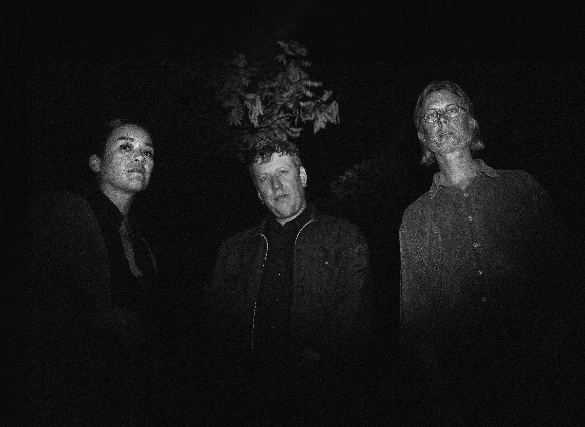
BIG|BRAVE’s preternatural instincts and depth of skill as musicians are on full display on their most naked and austere record to date, OST. The trio entered the studio with broader concepts and themes in mind, but no preconceived music. The overarching concept was to make a film score for a film that had yet to be created, to use minimal instrumentation, or more specifically not their standard band instruments, and to improvise within these parameters. “Although this record could stand on its own, we envisioned it being paired with moving images, which introduced a fresh and exciting way of working,” notes guitarist Mathieu Ball. In addition to forgoing their usual instrumentation, they notably built their own. Ball created a stringed instrument using piano strings simply called “The Instrument”. This instrument ended up becoming a central figure to the OST’s sound. Guitarist/vocalist Robin Wattie adds: “The strings Mathieu used for his instrument came from a discarded piano thatch that had been laying around in the hallway of my tattoo studio for ages.” The Instrument’s presence is felt throughout the record as a conductive element amplifying the album’s earthly, grounded nature.
OST was fully written and recorded in the studio. The band was free to enter the live room and record a take with whatever instrument was at hand. Once they had a good foundation for a song, Ball, Wattie, drummer Tasy Hudson and even engineer/producer Seth Manchester would each build on it, layering takes, from instrumental improvisations to abstract vocals, until they felt it was a completed piece. Wattie’s voice seamlessly blends with the instrumental flourishes made from “The Instrument”, a Wurlitzer, prepared piano, synths and a very limited amount of electric guitar. Additionally, there is a sprinkling of flute by Melissa Guion (MJ Guider). The performances of each player are tactile and ardent, even at their most subtle and effected.
Following OST’s completion, BIG|BRAVE contacted director/visual artist Stacy Lee to visually score the record. Director Lee and BIG|BRAVE, having previously collaborated, had established an artistic understanding which allowed BIG|BRAVE to give Lee no instruction, no limitations: the creative process synthesized across film and music. Select screenings with live performances are in the works.
BIG|BRAVE will be touring In US and Europe throughout the Spring.